The Affairs of Martha: Movies about Writing

It’s a who’s who of character actors in this 1942 B comedy! A small community of wealthy home freak out when it’s revealed that one of their maids will be releasing a tell-all book. Not knowing which maid or which family the book could be about, the wealthy start to mistreat the help who start to rebel. I love some humorous class warfare.
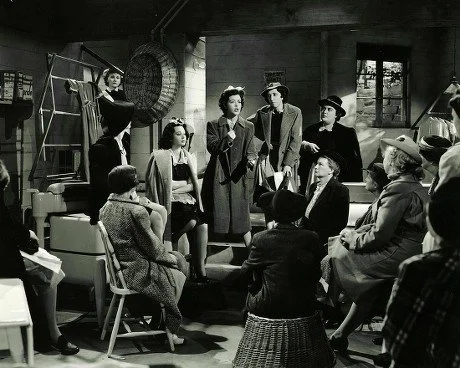
The voice of reason amongst the below-stairs group is young Martha (Marsha Hunt), a maid who declares that there is nothing in the Constitution again writing a book. She tries to keep an army of maids and cooks played by Marjorie Main, Jody Gilbert, and Marget Hamilton (YAAAASSSS Wicked Witch in the HOUSE!) from going on strike. Of course, Martha is the author of the soon to be published book. Martha works for the Sommerfields. The doctor/father (Melville Cooper) is a relaxed man more interested in his work than gossip. Mrs. Sommerfield (Spring Byington) is fairly calm and feels like the other women in the neighborhood are too jumpy about rumors. Their teenage daughter Miranda (Virginia Weidler) is an eccentric who already suspects Martha since she notices how smart and flowery her vocabulary is. Their grown son, Jeff (Richard Carlson) is an anthropologist has just returned from an over a year away studying the Inuit people. He brought back a stuck-up fiancee and fellow scientist named Sylvia (Frances Drake - not the pirate). By the way, almost every one in this is in another movie I love. About 1/3 of the cast appeared in some of my favorite pre-code and universal horror movies.

It’s revealed through a conversation with Martha’s super supportive publisher Mr. Archer (Allyn Joslyn) that Martha spent that past year going to night classes and writing to prove her intelligence to her secret husband, Jeff. However, Mr. Archer also wants her to forget Jeff and run off with him. There’s also a local mechanic and handy man named Danny who also has eyes for Martha. Meanwhile, Jeff assumed she would have had their marriage annulled while he was gone and is appalled to discover that she didn’t.
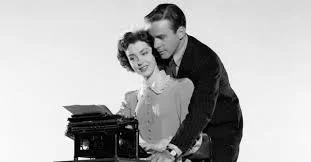
What I loved about this movie is that by becoming an educated writer, Martha finds her independence. Yes, she’s still in love with Jeff, but she’s able to handle the situation with confidence and poise. She explores options within her own life and tries to take control. That having been said SPOILER ALERT . . .

Mr. Archer reveals at a dinner party that Martha wrote the book that the whole neighborhood has been in fear of and that it’s been selected by the book-of-the-month-club (that’s a big deal in the 40s). The Sommerfields take the news in a variety of ways with the mother fainting, the father thrilled that it clears out his nosy neighbors, and the little sister thrilled that it ends his engagement with Sylvia. The book, it turns out, is not an expose. Instead, it’s a charming character study of how much Martha admires the Sommerfields. Jeff chases her down and they stay married in order to give the book a happy ending.

Little Women (1933/1949): Movies about Writing

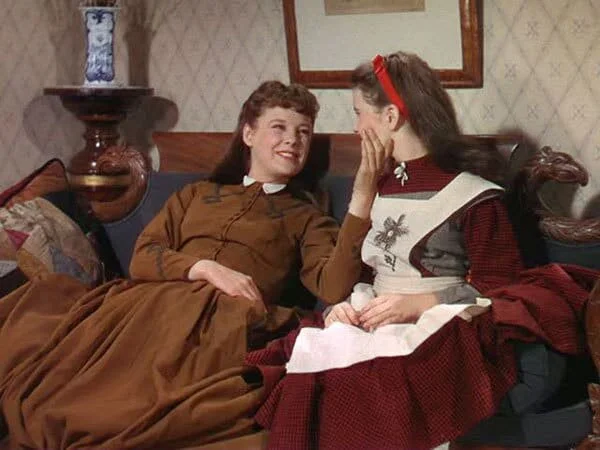
You might be wondering why I’m combining these two films - If you are asking that then you probably haven’t seen both them. Little Women from 1949 is almost a shot for shot remake of Little Women from 1933. They updated the cast, added technicolor, and switched the ages of Beth and Amy, but other than that - same movie. In 1949, they just hired someone to tweak the exact same screenplay.

Quick note on the casts, just to get it out of the way. In the 1933 movie Jo is played by Katherine Hepburn, Meg is Frances Dee, Beth is Jean Parker, Amy is Joan Bennett, Marmee is Spring Byington, and Douglass Montgomery as Laurie. In the 1949 movie Jo is played by June Allyson, Meg is Janet Leigh, Beth is Margaret O’Brien, Amy is Elizabeth Taylor, Marmee is Mary Astor, and Peter Lawford as Laurie. Okay, we have that out of the way.

If for some reason you don’t know this story, here’s the short story: four sisters come of age in the mid-1800s under the watchful eye of their strong, charitable “Marmee” and while missing their idealistic father. Meg is a practical girl who remembers when the family was well-off. Jo is a “tom-boy” (not my favorite phrase, but that’s what they use in the movies) determined to someday be able to support herself as a writer. Beth is the shy home-body that is adored and protected by all. Amy is the self-absorbed little debutante and has all the earmarks of a spoiled baby sibling. The unofficial seventh March is their next door neighbor, upper class Theodore “Laurie” Laurence who crushes on Jo, but in the original book is close to all members of the family. One of my objections to the 33 and 49 versions is how Laurie really only hangs out of Jo so certain events seem to come out of left-field when they happen (but totally normal in the book). To be fair, the ‘33 one does throw in a little more of the Laurie and other sister scenes then the 49 film.

Both open with the tragedies of the Civil War, the sentimental letter from the March father, and the Christmas play that Jo wrote being rehearsed by the 4 sisters (and the fantastic line “Rodrigo! Rodrigo! Save me! Then faint.). Jo declares all of the lovely things they will have when she’s a famous author and how they can snub all of the people who look down on their family. This really isn’t so much a statement of reality for authors, but a great statement for a teenage girl to make. In the 1949 version, Beth declares that Jo is a “regular Shakespeare!”

QUFAE3RCVMI6VMBU3Z64FNIZTM.jpg

In the 49 film, Jo tells Laurie how she wants to go to Europe because she wants to help her writing by traveling. When Jo has her first story published in a local paper, she keeps it a secret from all except Laurie (who sorta blackmails her into telling him) and hints at the fact to Beth. The 1933 film does include a scene where Jo reads the paper aloud to Amy and Meg, then revealing that she wrote it, earning a great deal of praise. In the 49 version, Laurie questions why she does all of this work for low pay and she says it’s not about the dollar, it’s about seeing her first story in print and knowing people might read it. Good answer Jo.

Despite his pride, all versions point out how Laurie is annoyed by Jo’s “scribbling” which is why the character of Professor Bhaer (Paul Lukas/Rossano Brazzi) is so important. He is about nurturing her talent and treating her as an intellectual equal. In the boarding house where Jo meets him, her landlady gives her a room with a table specifically so she can write. She takes his criticism of her writing in these movies with more of a grain of salt. More on that when I talk about the modern adaptations of the book. Instead of being upset about his words on her art, Jo just makes a lot of excuses about how her stories pay the bills.

Spoiler Alert: After Beth dies, Jo writes her greatest story, but in the 1933 film it’s a brief mention that she’s sent it off to Professor Bhaer for review and publication. The 1949 movie shows the finished novel being flipped through ready for editing.

LittleWomen-1949-jo-amy.jpg

I do love one scene where June Allyson as Jo is crying over her own story she’s written. You see her in the attic surrounded by her own scribbling and mock covers she has designed and repeating what she wrote out loud. Beth finds her and asks, “Isn’t it any good?”

“It’s wonderful,” Jo blubbers. Oh, the confidence of youth.

The 40s one really does focus more on Jo’s wish to be a writer, giving more little lines that remind the audience that she’s an ambitious artist.

1933.jpg
1949.jpg

Little Women: Movies about Writing

This month I’m going to cover the 1933, 1949, 1994, and 2019 Little Women adaptations. And I know people are going to be like, “But there are other versions of Little Women you could watch this week?” Well, I don’t wanna. Most other versions don’t focus very much on Jo’s wish to be writer (except for maybe that anime TV series, but that’s hard to find). So, here’s my suggestion if you are really annoyed - go watch the 70s versions of Little Women (or the silent version, that’s a trip as it’s lost) and you tell me what they include about Jo’s writing goals. I’m curious, but not enough to re-watch any of those versions :-)