

This Frank Capra classic is about an eccentric family whose oldest daughter wants to marry into a banking family. Oh, and of course, the banking family is trying to buy the family home in a shady deal.
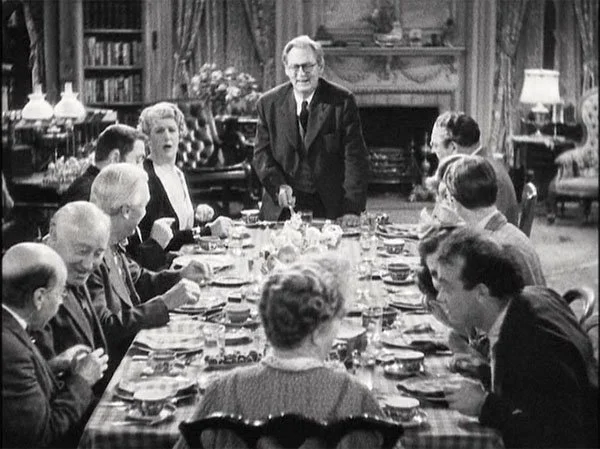
The patriarch of the household is Lionel Barrymore, an armchair philosopher who doesn’t believe in war or income taxes, and grandpa to the Neighborhood. His daughter, Mrs. Sycamore is a writer. His son-in-law likes to invent fireworks with the help of the former ice man that moved into their house nine years earlier. He has two granddaughters One is Essie, played by Anne Miller, a dancer who is married to a musician named Ed, but the pair also make and distribute candy as a means of paying the bills. The other granddaughter is Alice, played by Jean Arthur, who is in love with the bosses son Tony played by Jimmy Stewart. Also, in the house is their housekeeper, her fiancé, a former clerk who invents toys, and a pet raven. Alice loves her family, but worries about how her future in-laws will react to them. Most of the film is about class warfare, the definition of wealth, and various shenanigans.

At the beginning of the movie, the daughter is working on a play and asking everyone in the house if they have ever been in a monastery. When her father asks her how it’s going she says she’s written herself into a monastery and can’t get out. He replies, “Well you’ll figure out a way. Remember the time you got out of jail.” Each mishap she looks at as inspiration and excitement. Alice also asks that her mother not read any of her plays aloud upon the first meeting with Tony. Alice explains that her mother writes plays only because a typewriter was delivered to the house by mistake and she liked it. I feel like this is as good a reason for any to become a writer.


Quisque iaculis facilisis lacinia. Mauris euismod pellentesque tellus sit amet mollis.