Hi Nellie! : Movies about Writing

This is a short one - like this movie.

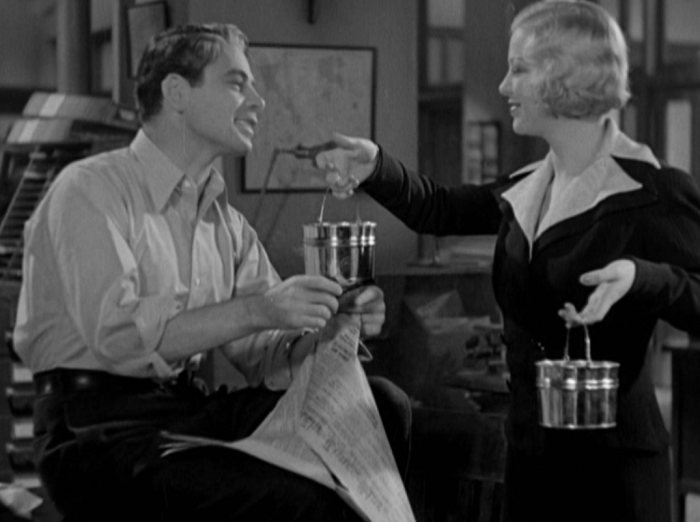
Brad (Paul Muni) is a newspaper editor attempting to solve a disappearance and theft. Do police not actually solve crimes in the 1930s? They just leave it up to newspaper reporters?Anyway, I don’t want to talk about that. I want to talk about the movie’s title and the world of Great Depression era journalism according to the movies.

“Hi Nellie” is a reference to the paper’s heart throb column run by Nellie Nelson. However, there is no Nellie. At the beginning of the film, Glenda Farrell’s character, a former ace reporter named Gerry, is acting as Nellie. By the time Brad is starting to investigate the main plot line, he becomes Nellie. Being Nellie is a punishment for not getting the big scoop or wasting the paper’s time.The rest of the staff is pretty much encouraged to give the current “Nellie” as much crap as possible. Gerry is thrilled when she no longer has to read the woes of women seeking relationship advice. When Brad has the assignment, he tries to get himself fired using the column, only to accidentally make it a hit. And in making Nellie successful, he stumbles onto a clue to the mystery that got him demoted.

I just think this entire dynamic is hilarious. The paper seemed to only keep the heart throb column as a punishment. No one who considers themselves a legitimate reporter wants to “deal with” given out a advice. Plus, according to these movies, it’s their job to solve murders. Who has time to read about break-ups when you’re protecting your city one dramatized article at a time?
Life of Emile Zola: Movies about Writing

I confess I know little about Emile Zola and the only one of his stories I’ve read is Therese Raquin (and I never finished it). But they reference this film in the movie The Majestic and that left me curious. I also learned that Zola was a fighter of antisemitism using both his verbal and written powers. Of course, the movie made in 1937 didn’t dare bring up this topic even though it was the entire reason for the climax of the film!

Paul Muni plays a sympathetic yet pretentious Zola with the usual starving artist tropes. The film opens on a cold garret where he lives with Paul Cezanne and the burn popular novels in order to keep warm. I get that Zola wants to believe in the idea that books need to say something important, but burning? Really dude! Get off your literary high horse. What was your lofty point in Therese Raquin, huh? Yes, I’m just going to go back to that one. It’s my only argument. If you read it or watch a movie version, you’ll see what I feel it makes a valid argument here.

Zola starts as a penniless idealist who can’t hold down a writing job because his topics are not bestsellers. He investigates labor conditions, homelessness, rights for women, and even how the law treats prostitutes. This movie is post Hays Code so they never call Nana, the woman he interviews, a prostitute although it is heavily implied. His fictionalized account of how life treated her to put her in that circumstance becomes his first successful book (sex sells even when it’s highly depressing and oppressive sex). The bookseller is happy to surprise Zola with a large check for 1800 Francs. In reality, Zola interviewed several prostitutes and women who worked in a theatre in Paris. Also, the actual book Nana sounds like just an exploit of how women ruin their own lives. Either way, there was no single Nana, but that’s not very good for a screenplay. Still, I find the movie idea so awful. He essentially tells this single woman’s story without her permission. He gives her a copy with a few francs inside though.

Zola and Cezanne part ways when Zola continues to write scandalous exposes of life in contemporary Paris which make him a comfortable living. He starts to focus more on politics instead of social issues, criticizing the French army and leaders.

Most of this film focuses on what is known as the Dreyfus affair. Alfred Dreyfus (Joseph Schildkrut) is a Jewish (in the movie Hungarian) officer accused of treason. He’s railroaded by the French government with little proof of his guilt and sent to Devil Island for years. *History fact: the only evidence against Dreyfus was disposed of letter found by a cleaning woman and written in handwriting proven to be another member of military personnel. The French military did not want people to think they could not catch a traitor in their midst and supposedly fabricated evidence to blame Dreyfus and have to hunt down the other man. Dreyfus didn’t get a full exoneration by the French government until 1995 because even 80 years later, they didn’t want to be wrong.

When Dreyfus’s wife presents Zola with new evidence in the case, she begs him to expose that the French military knows her husband is innocent and do not want the public shame of admitting it. A middle aged Zola builds of renewed energy at his own outrage and writes the famous newspaper article, “J’Accuse…!” The passionate words of his article convince a portion of the French people of the truth. Again, I’m going to state that the original point of J’Accuse was to show that Dreyfus was a scapegoat due to his Jewish background and that antisemitism was keeping-him imprisoned despite evidence of his innocence. But Hollywood didn’t want to deal with that mess topic in the times of Hitler and appeasement.

There’s rioting in the streets and Zola is put on trial for his open letter of anger. In court, Zola states that he stands up for his country with “his pen”. He gives a great “Oscar clip” speech despite being a “writer” not a “talker”. His argument that his work, even his declarations of Dreyfus’s innocence, is a plea for the good of France.

I’m not going to give away the ending (you can look it up elsewhere or read a biography to get the rest), just know that the last half of the movie is about how writing can convince or infuriate or even fight for a man’s life.